
Inside SkLO — Choosing Handblown Glass Lighting & Objects of a Higher Quality
A practical guide
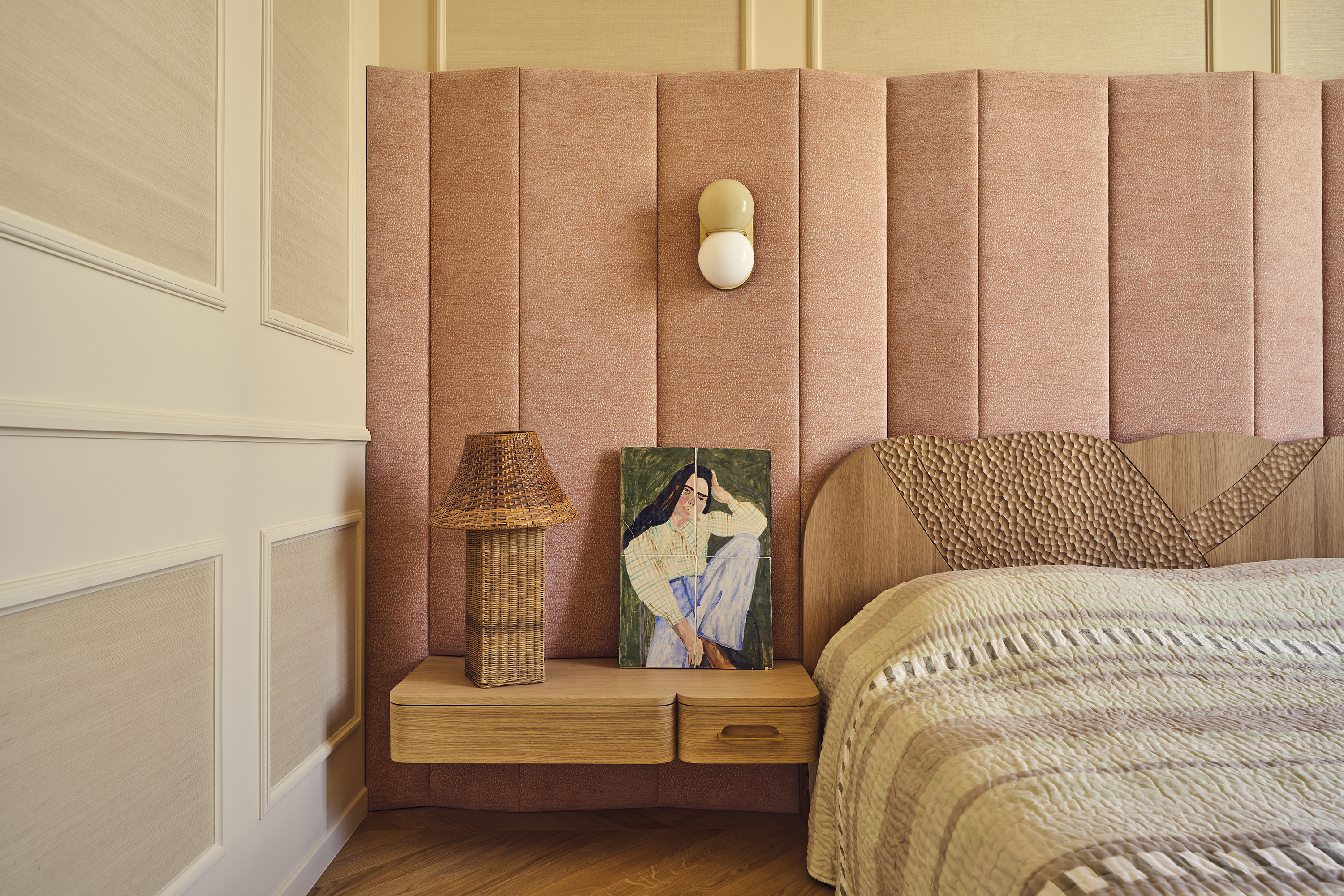
SkLO creates handblown glass lighting and objects, bringing contemporary design together with generations of Czech glassmaking technique.
SkLO’s work explores the possibilities of glass in lighting — pendants, chandeliers, sconces and multi-pendant compositions — and the relationships between glass, metal and space. Each design begins with an idea about form and an intimate understanding of how it can be made.
For architects, interior designers and developers, these relationships extend into a space: the scale of a pendant, the atmosphere of a dining room, the color of an object seen across a room. This guide covers what to weigh when specifying SkLO glass lighting, from scale and material to customization and installation.
In this guide
- How does SkLO lighting work at different scales?
- How should designers choose glass lighting for a space?
- What should be confirmed before specifying SkLO lighting?
- Choosing the right suspension and accessories
- How does glass color change the experience of a space?
- Why is variation part of handblown glass?
- Can SkLO lighting be customized for a project?
- What role does Czech craftsmanship play in a SkLO design?
- Why choose SkLO for meaningful spaces?

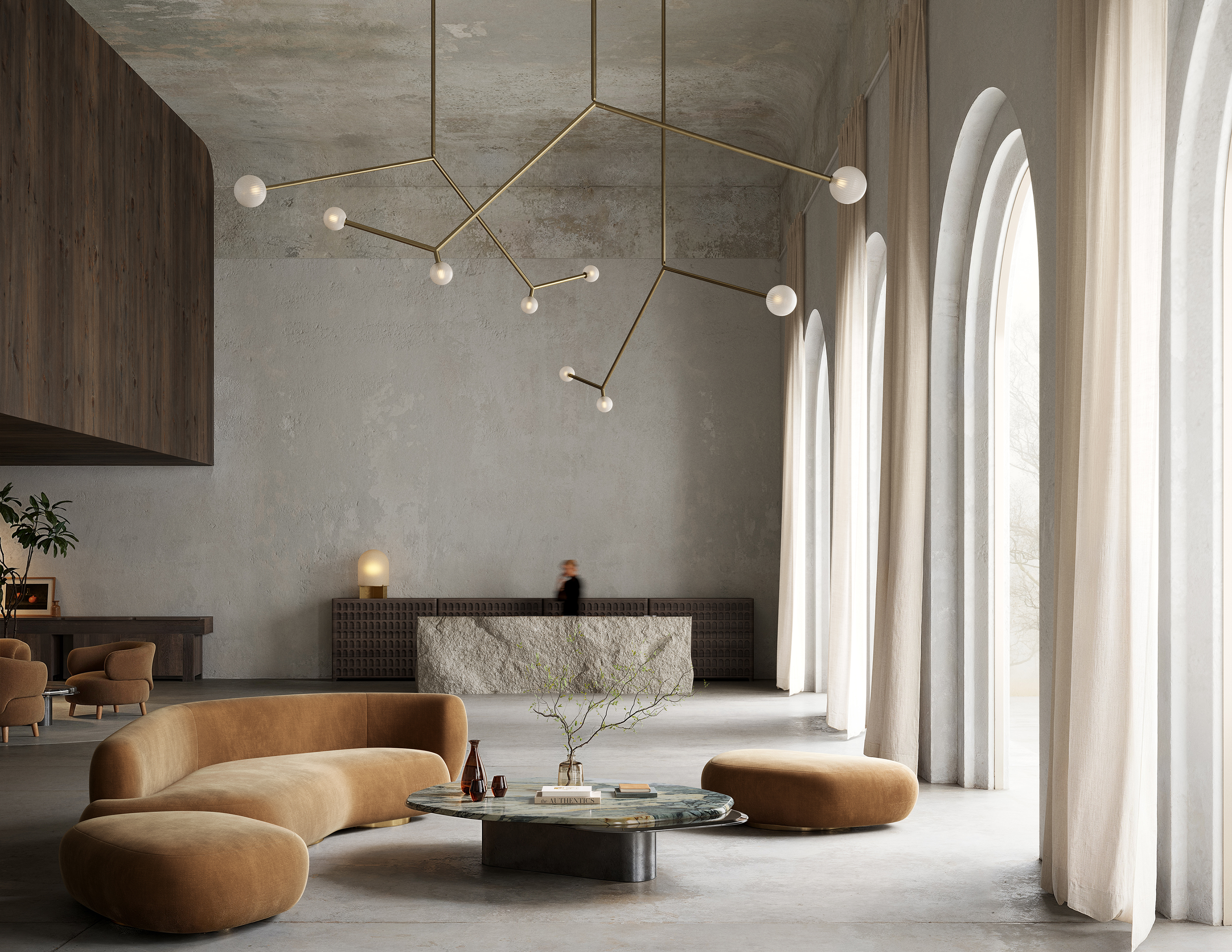
How does SkLO lighting work at different scales?
SkLO lighting works at different scales through individual fixtures, chandeliers and compositions of compatible pendants. Form, spacing and suspension determine whether the lighting reads as an intimate detail or an architectural presence.
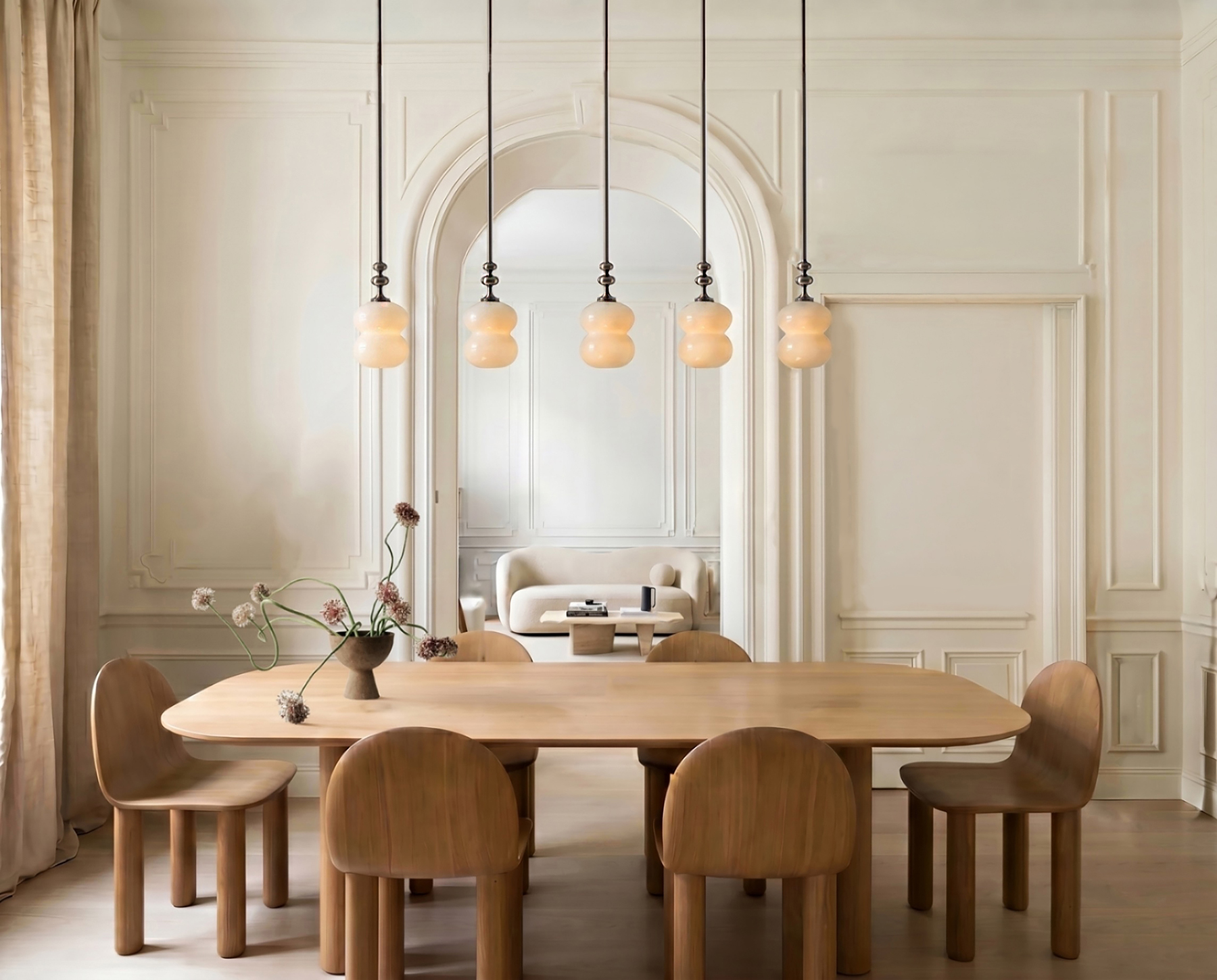
A pendant above a small table can define a place within a larger room. Several pendants can introduce rhythm along a bar. In a taller volume, a composition can establish a relationship between the ceiling and the people below.
The spacing of pendants shapes how an installation feels within a room. Spread farther apart, they can follow the length of a table or bar. Grouped closely, they create a focal point. The arrangement should complement the furniture and architecture, with hanging heights that allow clear views across the space.
SkLO’s canopy options allow compatible pendants to be composed in different arrangements. Simple Canopy Options let a pendant follow a sloped ceiling or swag to a new position away from an existing electrical box, which is useful in renovations. The more complex Multi-Pendant Canopy systems support custom fixture designs, from a small group of pendants to large-scale lighting installations.

Matching the lighting approach to the space
An individual pendant creates a focal point; a chandelier brings several lights into one designed composition; a multi-pendant arrangement allows compatible pendants to be positioned across a space. The choice depends on the room’s proportions and the role the lighting should play.
|
Lighting approach |
What it brings |
Best for |
Key specs to resolve |
|
Individual pendant |
A focal point with one distinct form |
Small tables, bedsides, single accents |
Fixture size, hanging height, task lighting |
|
Chandelier |
Multiple lights, one composed fixture |
Dining tables, entries, larger rooms |
Overall width/height, ceiling support, clearances |
|
Multi-pendant arrangement |
Scale beyond one fixture; repetition with flexible spacing/drop heights |
Islands, bars, open stairways, tall volumes |
Pendant/canopy compatibility, drop lengths, full layout |

How should designers choose glass lighting for a space?
Choose a piece by weighing its scale against the room and furniture layout, its glass color and finish, its metal and cord finishes, the light it needs to provide and where it should sit within the space — whether it’s a wall sconce, a single pendant, a chandelier or a multi-pendant composition. A successful specification considers how the fixture looks, the light it contributes and its relationship to the people using the space.
Choose the piece to suit the space it will hang in. Above a dining table, consider its size against the table’s shape and proportions, and suspend it where it won’t block conversation. In a stairwell or reception area, consider ceiling height, clearance and how the fixture looks from different viewpoints.
SkLO provides 3D models of every design in multiple file types, so designers can place a fixture in their project model and visualize its scale and position before specifying. Physical samples of glass colors, metal finishes and cord colors can be ordered from SkLO’s Resources page.

What should be confirmed before specifying SkLO lighting?
Confirm the selected fixture’s dimensions, overall drop, glass and metal options, electrical specifications, dimming compatibility and installation requirements. These details belong to the individual design and the project’s location; they should be reviewed using the fixture’s current product documentation.
Discuss the ceiling conditions with the installation team before finalizing the composition. Allow for the weight of the complete arrangement, mounting requirements and access for installation and maintenance. SkLO’s technical resources and project support help designers resolve these details while preserving the intended proportions.
Choosing the right suspension and accessories
Consider suspension options that are compatible with the chosen fixture and suitable for the ceiling height. These determine how far the fixture hangs down and contribute to its appearance in the room.
SkLO’s cord-suspended fixtures use fabric-wrapped electrical cords, turning a functional element into a design detail. Most are field-adjustable: check the standard cord length supplied and order extra cord if the overall drop requires it. Stem-suspended fixtures come with field-adjustable modular stem kits that combine pre-cut lengths to reach the right overall drop. If field adjustment isn’t needed and the exact length is known, specify the overall drop and SkLO will cut the stems to order. Plan these details early, and confirm available suspension lengths, finishes and installation requirements with SkLO before finalizing the specification.

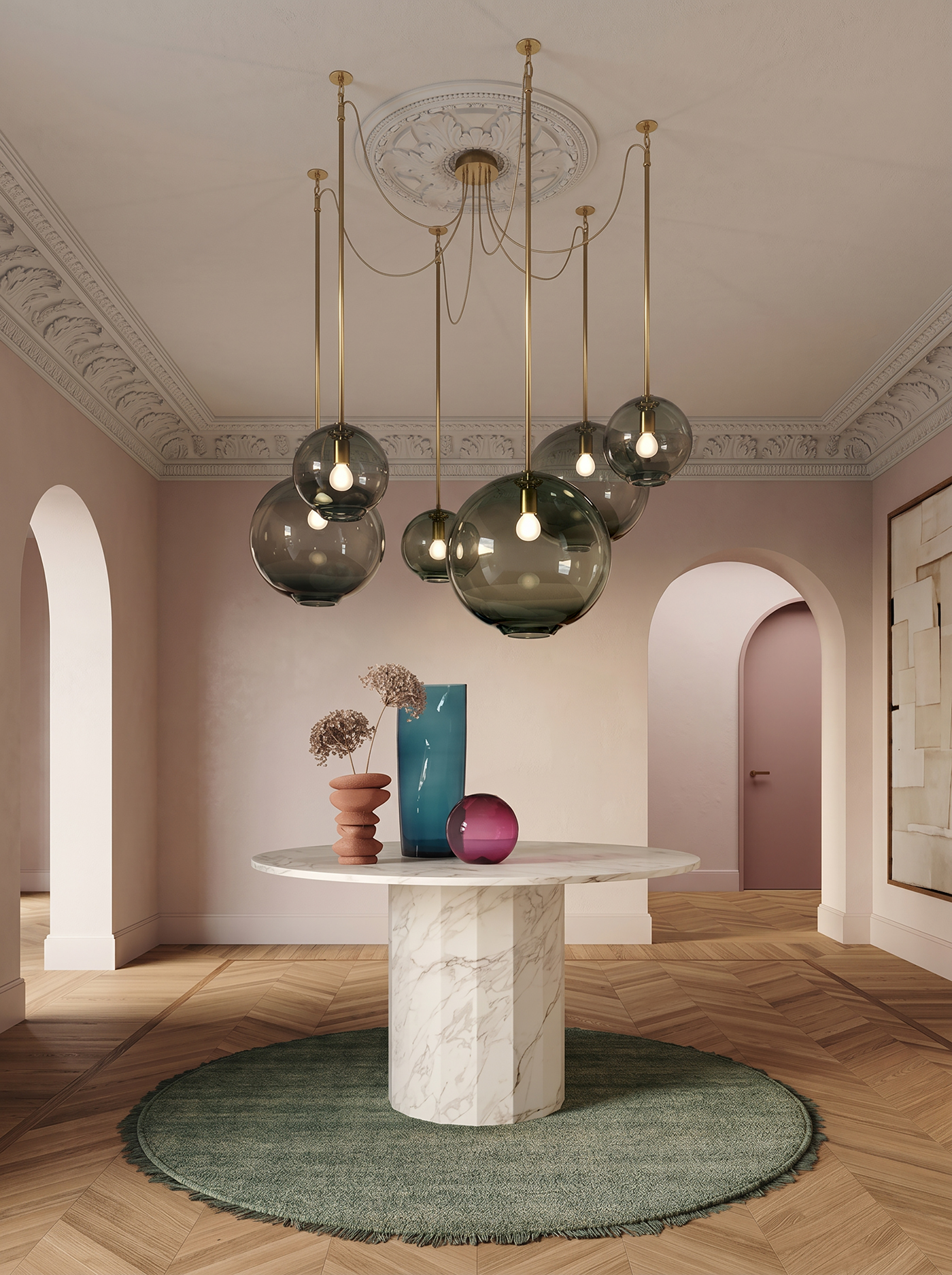


How does glass color change the experience of a space?
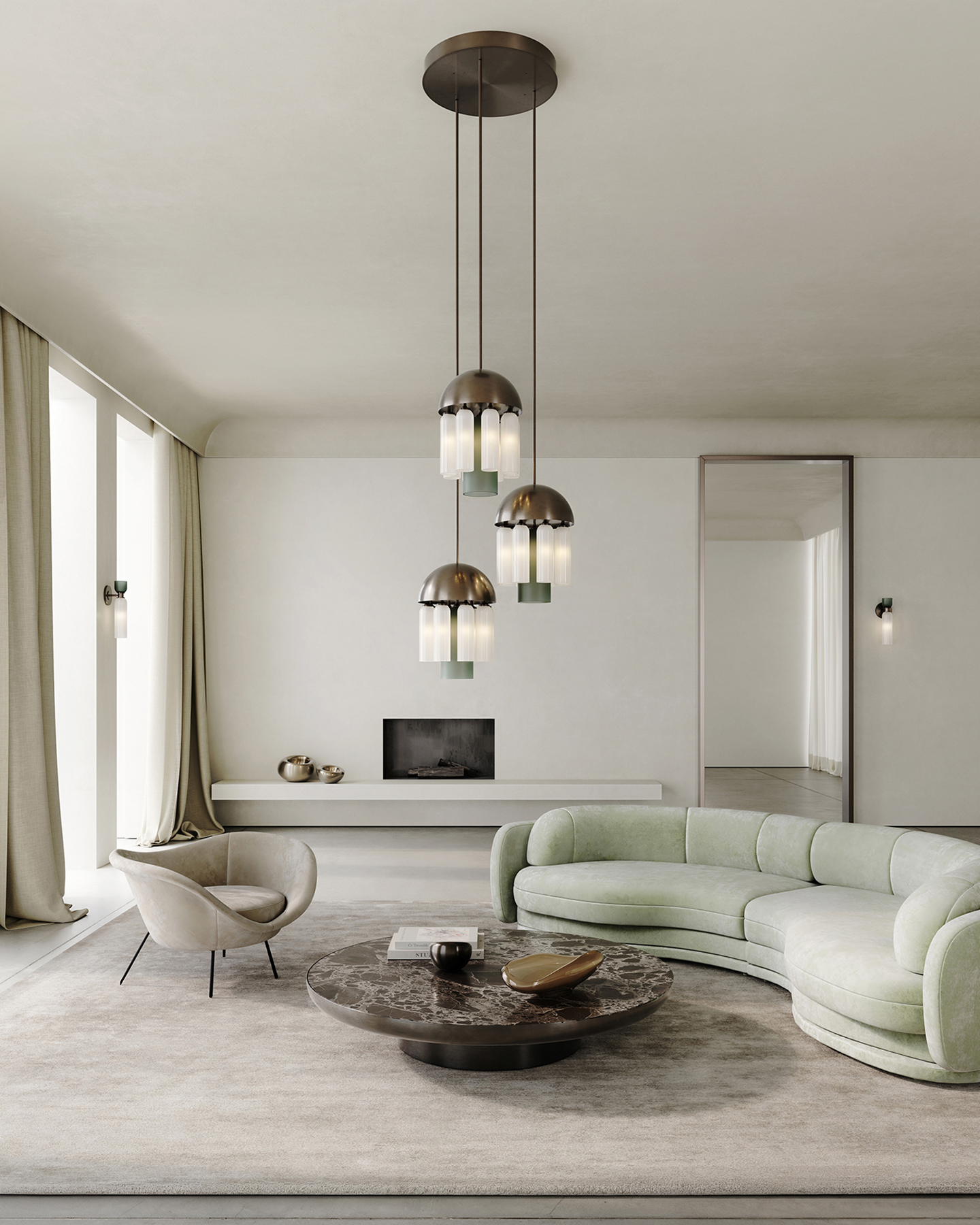
Glass color changes how a design relates to its surroundings, while transparency and finish shape how the glass diffuses light. (See the Custom Glass Color palette.)
Transparent glass acts as a lens, revealing overlapping tones and reflections. It diffuses little light but gives color a vivid presence in a space.
Opaque glass gives color a more defined presence. It diffuses light, spreading more of it into the room, and because it can’t be seen through, its shape reads as form whether lit or unlit. The glass color also tints the light it gives off.
Frosted and textured glass softens both the form and the light. It sits between opaque and transparent, glowing in daylight when unlit and from within when lit in a dark space.
Each option offers a different relationship to the materials around it.
At SkLO, color is part of the design itself. The Perla Pendant, part of the SkLO + AvroKO collection, is a perfect example that brings softly colored opaque glass together with decorative brass profiles. The pairing of glass and metalwork gives this simple, sculptural form its distinct presence.

Why is variation part of handblown glass?
Variation is part of handblown glass because each piece is shaped individually while the material is hot. Small bubbles and variations in shape, dimension and color — from piece to piece and even within a single piece — distinguish handmade glass from mechanized production. When pendants are grouped together, these variations give each piece its own character while maintaining a cohesive composition.
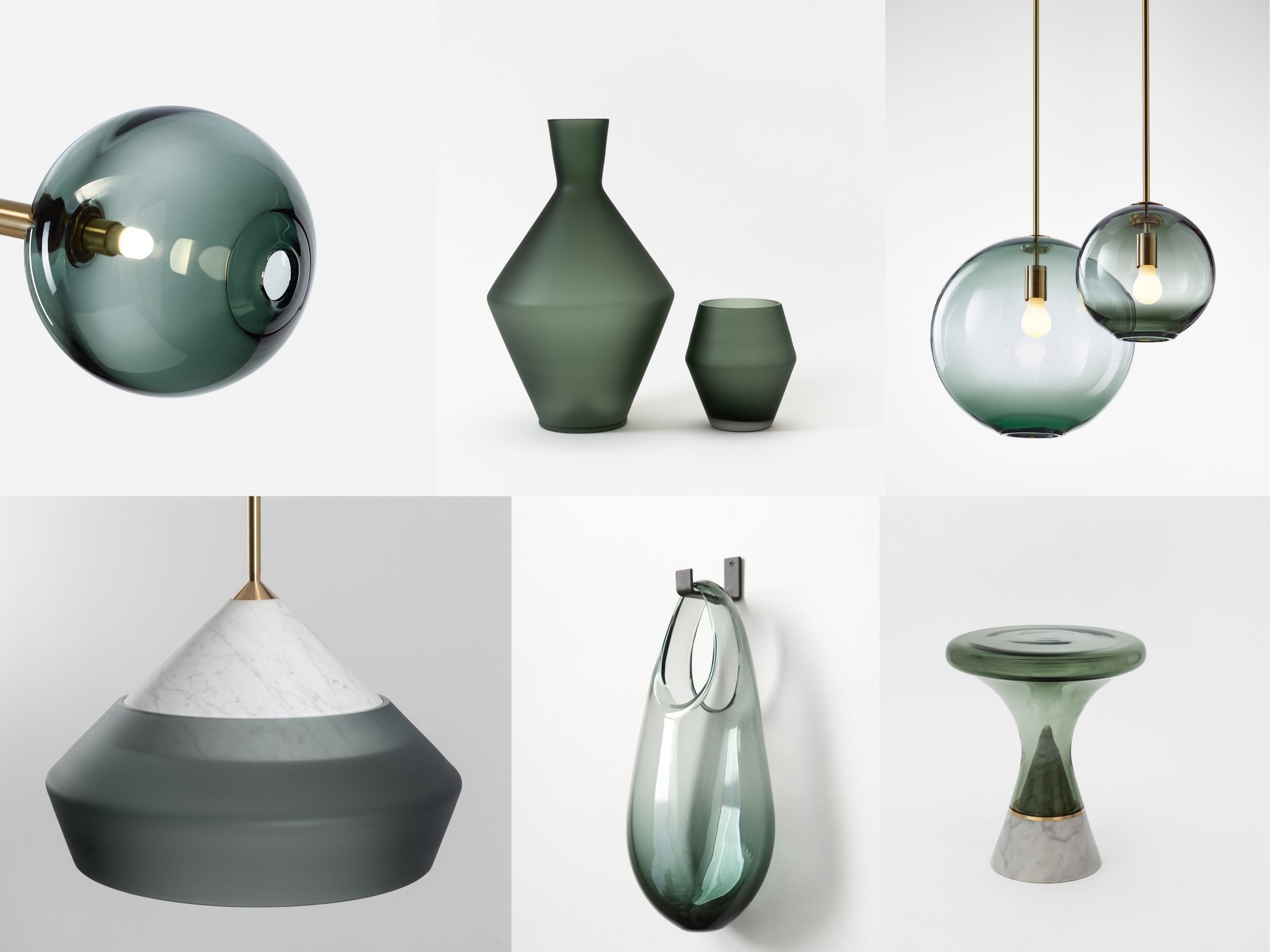
Can SkLO lighting be customized for a project?
SkLO offers project-specific possibilities through eligible glass color selections, Multi-Pendant Canopy systems and suspension options. The available choices depend on the design and are developed within the requirements of each program.
Because SkLO lights are made to order, each design is offered in multiple standard glass colors and finishes, metal finishes and fabric-wrapped cord colors. Combined, these options give many designs hundreds of possible configurations, so a fixture can be tailored to the mood of a space.
These choices bring creative and technical work together. Glass color, metal finish and cord color influence the appearance; suspension and mounting details determine how that intention can be realized. Sloped ceilings and offset pendant positions require compatible solutions identified during specification.
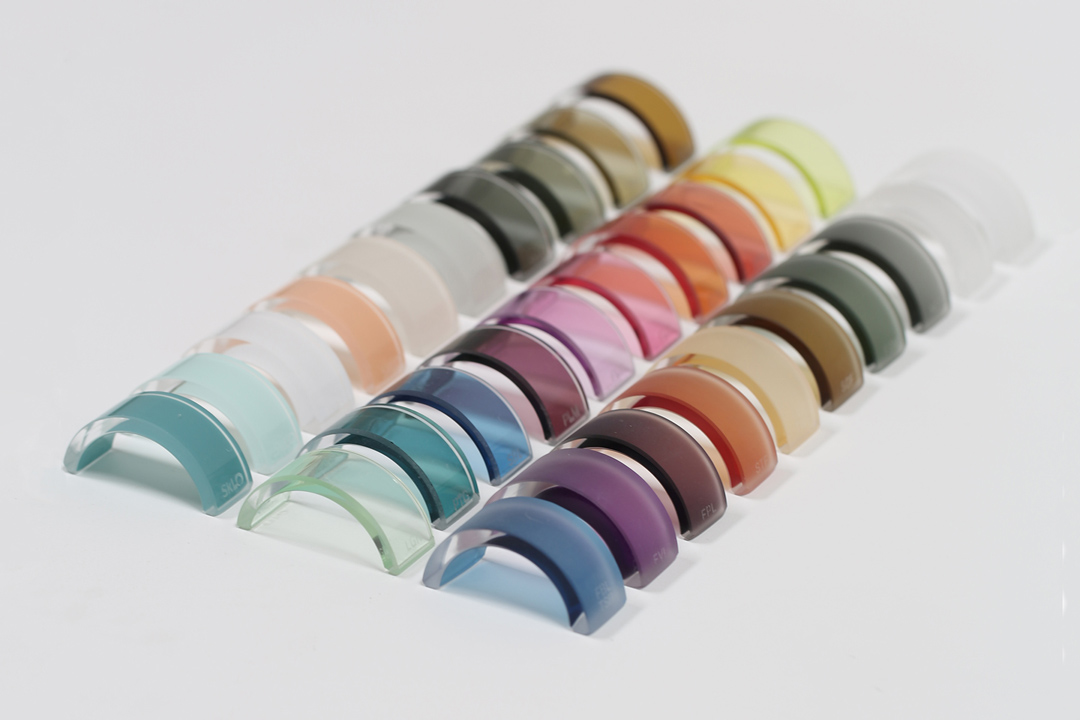
The Custom Glass Color Program extends eligible designs into a core palette of 36 transparent, opaque and frosted colors.
Why choose SkLO as a project partner?
SkLO’s team brings manufacturing knowledge, design guidance and technical support as a project develops. Specification resources bring together drawings, available installation information, 3D models and sample requests to help teams carry an idea through to installation.
Confirm eligibility, minimums and lead times for custom glass colors. Establish overall drop length and whether suspension is field-adjustable or cut to order. Coordinate electrical requirements, ceiling support and access with the project team. Where timing is critical, review eligible QuickShip selections with SkLO.
What resources does SkLO offer for planning a lighting installation?
SkLO’s Resources page brings together product specification sheets, installation instructions, 3D models and catalogs to support fixture selection and planning. Glass, metal finish and cord samples also help designers choose among each product’s standard options.
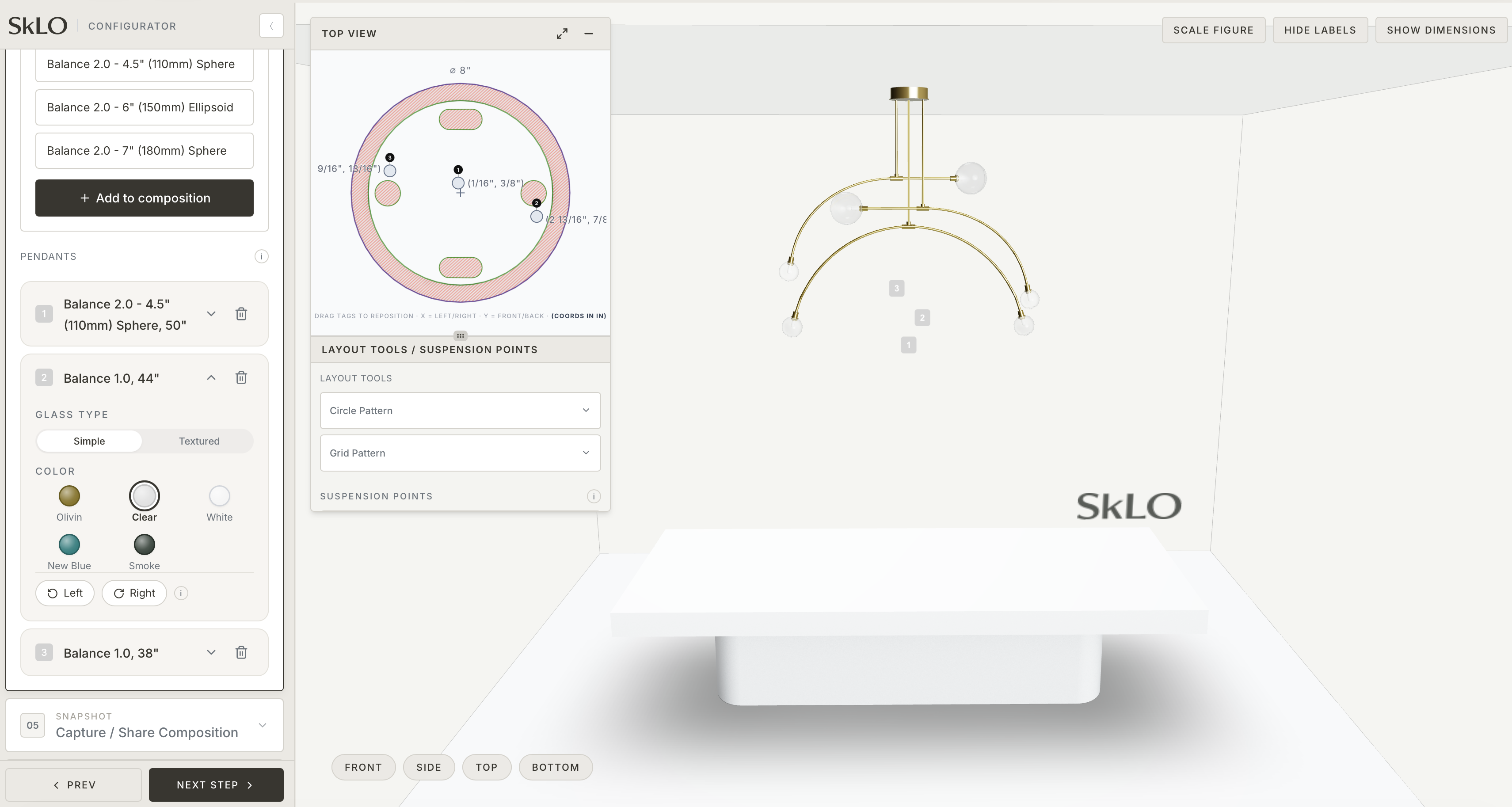
For arrangements with multiple pendants, SkLO’s Multi-Pendant Canopy program groups pendant fixtures on a single canopy, with several canopy sizes and shapes and options for custom swagging. Compositions range from two or three pendants to elaborate chandeliers and large lighting installations. SkLO’s Multi-Pendant Configurator helps designers visualize and configure custom compositions before specifying — a digital, iterative way of working rather than selecting from a fixed catalog. Use it to explore an arrangement, then review the relevant technical documents and confirm project requirements with SkLO before finalizing the specification.
What role does Czech craftsmanship play in a SkLO design?
SkLO’s point of view brings contemporary design together with the centuries-old craft of Czech glassblowing. We create simple, expressive forms that reveal the organic qualities of glass and the skill of the maker.
The name SkLO is the Czech word for glass. Czech glassmaking is central to how we work: SkLO’s designers work directly with teams of skilled glassblowers, bringing contemporary ideas to a centuries-old process. The glassblowers’ expertise and the designers’ understanding of glass inform every SkLO design.
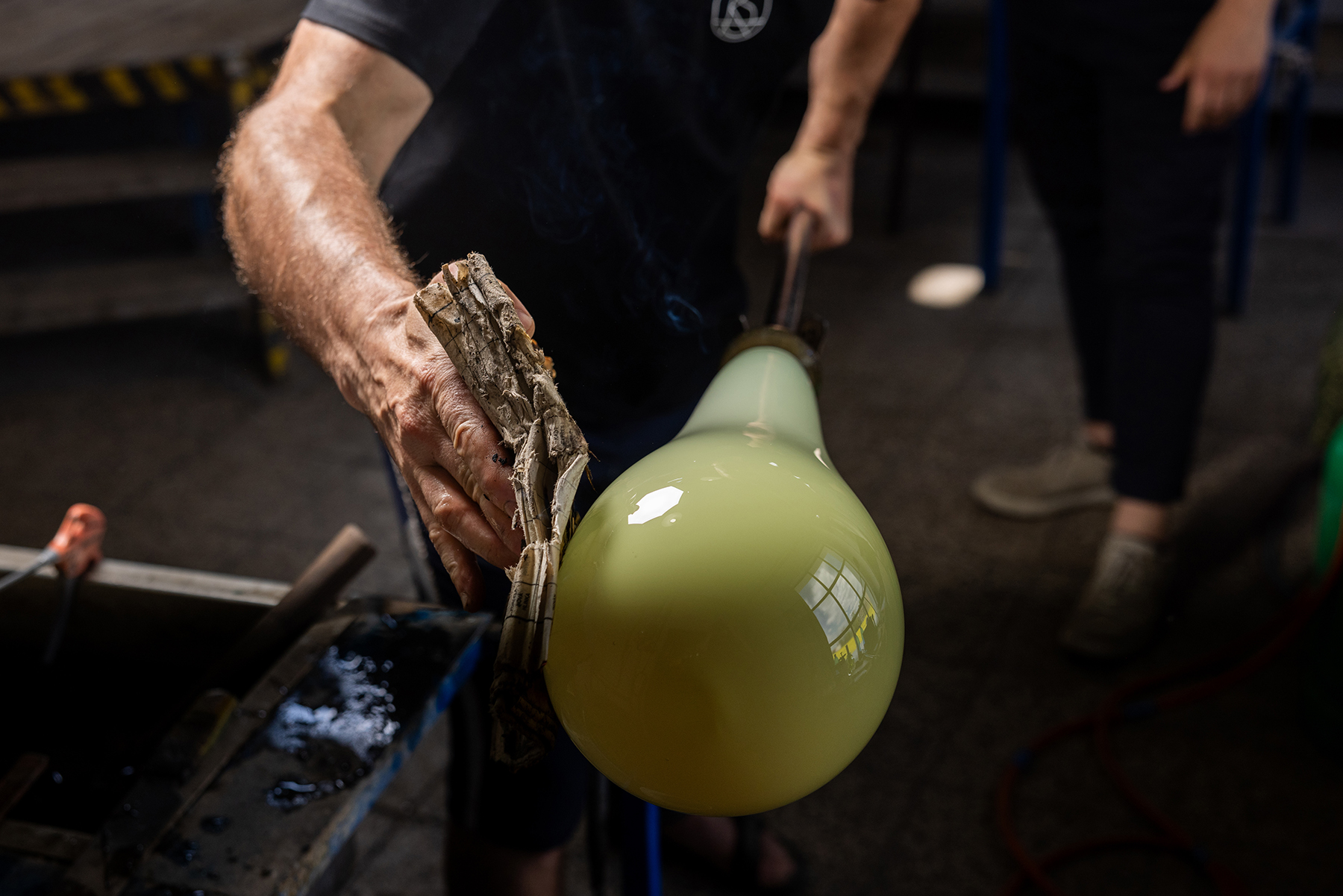
SkLO’s handblown glass is made in its own glass studios in the Czech Republic, where skilled craftspeople help give each design its form and character. Designing for this material requires understanding how molten glass behaves — and what that process makes possible.
In the furnace, glass responds to heat, gravity and movement. The glassblowers have little time to pause. Experience guides the teamwork behind the turning of the pipe, the shaping of the form and the moment when the glass is ready for the next action. A finished piece holds the result of these decisions.
This exchange between intention and material is part of our design process. An idea must find its expression in glass, and what happens during making can suggest possibilities of its own.
In the Angle 3.0 Pendant, three handblown glass diffusers are arranged along an asymmetrical brass structure. The relationship between the glass and metal gives the composition its graphic character. Variation in the weight of the diffusers also influences the way the pendant hangs, making the material an active part of the design.
Design and craftsmanship, working together
SkLO brings original design and Czech glassmaking expertise together with considered metalwork and fixture construction. SkLO’s understanding of the material informs both the character of the glass and the way a finished light takes its place within an interior.
Why choose SkLO for meaningful spaces?
SkLO offers original design grounded in the knowledge of making, with the resources and collaboration that professional projects require. SkLO’s work brings a consistent point of view to glass while leaving room for the individuality of each piece and each interior.
That same design philosophy extends beyond lighting. SkLO’s OBJECT, TABLETOP and FURNITURE collections share the same point of view and pair naturally with SkLO lighting — vessels, tabletop pieces and furniture that pick up a similar material language within the same space.
Founded in 2009 by Pavel Hanousek, Karen Gilbert and Paul Pavlak, SkLO draws on three complementary perspectives — Pavel’s connection to Czech culture and glassmaking, Karen’s background as an artist and metalsmith, and Paul’s architectural eye for proportion and structure.
We believe that beautiful design contributes to everyday experience. That belief informs the shape of a light, the balance of a vessel and the feel of a drinking glass. It also informs how we work with the architects and designers who give those things a place.
A finished space brings these relationships into view. Glass catches the daylight. A pendant is illuminated. People gather around a table. The design becomes part of living.
Explore SkLO in residential and hospitality projects for further perspectives on how designers bring the collections into architecture.


